
Solutions
Centrical’s suite of software solutions helps leading enterprises improve frontline employee performance.
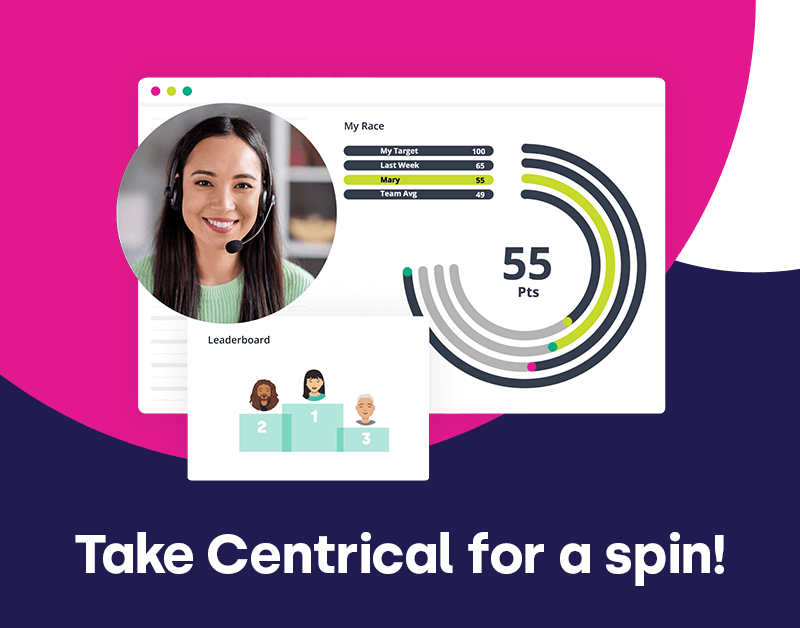


Resource Center
Explore the latest content about gamification, frontline performance, employee engagement, and more!
Visit resource center
Visit resource center


- Solutions
- Platform
- Gamification
 Engage and motivate your frontline teams
 - MegAI
 Improve performance with an AI-powered digital coach
 - Quality Assurance
 Deliver world class CX with dynamic, actionable quality evaluations
 - Performance Management
 Boost performance with personalized, actionable goals
 - Coaching
 Nurture employee success with the power of AI
 - Voice of Employee
 Listen and respond to your frontline, continuously
 - Microlearning
 Drive productivity with performance-driven learning that sticks
- Gamification
- Department
- Industry
- BPO
 Drive agent efficiency, deliver client results
 - Technology
 Keep tech teams motivated and proficient on products and services while exceeding targets
 - Finance
 Maintain compliance while building customer happiness and loyalty
 - Energy
 Enlighten energy teams to boost engagement
 - Insurance
 Engage, develop, and retain your agents while driving better CX
 - Hospitality
 Improve the employee experience for your reservations and service desk agents
- BPO
- Use Case
- Platform
- Resources


 Madeleine Freind
 Natalie Roth
 Linat Mart












 Doron Neumann
 Gal Rimon
 Daphne Saragosti
 Ella Davidson
 Ariel Herman
 Ronen Botzer