A role-play simulation can look convincing in a demo and still fall short with a live customer. What matters is whether the practice recreates the pressure, decisions, systems, and behaviors of a live interaction. Sounding human is only part of it.
A realistic simulation combines responsive conversation, emotional variation, and interruptions. It also includes branching scenarios, system navigation, policy decisions, and feedback tied to the operation’s own standards. A simulation earns its place in frontline employee training when it helps the learner practice the full job, not an isolated script.
What a realistic role-play simulation includes
Beyond natural language generation
A realistic simulation changes direction when the learner asks the wrong question or misses a cue. It also reacts if the learner chooses the wrong resolution. It can represent tone, urgency, sentiment, and multiple participants. For example, legal-services intake teams need to test what happens when a caller passes the phone to a family member. That is a different skill from answering a single, cooperative voice.
On-demand simulation tools give agents the repetition they need to handle these shifts. A short product demo shows what this looks like in a customer service scenario, from the live exchange to instant feedback.
Learners stay engaged when the AI responds quickly and uses natural cues to cover processing delays. Visual and audio feedback also help the exchange feel real. If the technology feels slow, the practice can stop feeling safe.
The role of conversational fillers
Silence changes the learner’s experience. A system that pauses without explanation can make the exchange feel broken. Natural verbal cues, such as a short acknowledgment, keep the conversation moving while the next response loads. Evaluate this in a live trial, not only through a product tour.
The three pillars of process realism
- Emotional volatility and branching logic. The AI should respond differently to a calm customer, an urgent customer, and a frustrated customer. Mirroring tone and urgency gives agents practice in adjusting their own behavior.
- System navigation and policy adherence. The learner should talk, search, document, and apply policy in the same sequence required on the floor. Today, Centrical AI Role-Play Simulations cover the conversation. Workflow Simulations, which will bring system navigation and policy steps into practice, are on the Centrical roadmap. Behavior modeling training can build both interpersonal skills and technical skills such as using software. Some tools focus only on the simulation. A platform that connects practice to performance also ties each session to live KPIs and gamified milestones. AI can flag a recommendation, but a manager or designated evaluator should decide whether the behavior meets the operation’s standard.
- Multi-party dynamics. Test interruptions, handoffs, and competing voices. A finance or retail agent may need to keep rapport while navigating an application and protecting required information.
Technical benchmarks for engagement
Speed and speech recognition decide whether practice feels like a real conversation.
The simulation should reply without awkward gaps and understand accents, names, and background noise without making learners change how they speak. Scientific American has documented how speech recognition mishears some speakers more often than others.
Why low-stakes practice supports transfer
Transfer means a skill practiced in training shows up in real work, on a live call with a real customer. AI practice gives a learner private repetition without the pressure of being judged by peers or a manager, as in human-to-human role-play. That matters when someone knows the policy but becomes nervous once the conversation starts. AI role-play can give hesitant learners a lower-pressure way into difficult conversations.
That safety is only a starting point; you still need to show the skill carries over to live calls. Pair AI role-play with manager review and targeted AI-powered coaching. Link these to live QA and KPI trends. This is the operational loop behind contact center CX improvement. Arise Virtual Solutions, for example, reduced training time by combining personalization with data-driven performance management.
How to evaluate scalability and transfer
Scenario maintenance
Use this checklist during evaluation:
- Can L&D update policies, products, personas, and branching paths without extensive technical support?
- Can learners or supervisors create scenarios from real performance gaps?
- Can the tool represent the full agent journey rather than one exchange?
- Can feedback criteria mirror the current QA scorecard and vary by role or scenario?
- Does each practice session produce a specific on-the-job behavior goal that a manager can revisit?
Measure speed to proficiency through behavior change on live calls, not practice volume alone. Review QA behaviors, adherence, resolution quality, and coaching follow-through against the original goal.
Before you go
How do I measure the ROI of AI role-play?
ROI from AI role-play comes from connecting practice to operational measures. These include QA behavior, adherence, resolution quality, and speed to proficiency. Set a baseline. Define the behavior the simulation targets. Review live performance with a manager. Practice completion alone does not establish business value.
Can AI role-play replace human coaches?
AI role-play assists human coaches. It saves coaches and team leaders time, so they can review sessions and sit down with a team member on the specifics. AI generates practice and recommendations, and managers interpret the context, discuss judgment calls with the agent, and decide the next action. The right split gives agents more repetition without removing the human coaching relationship.

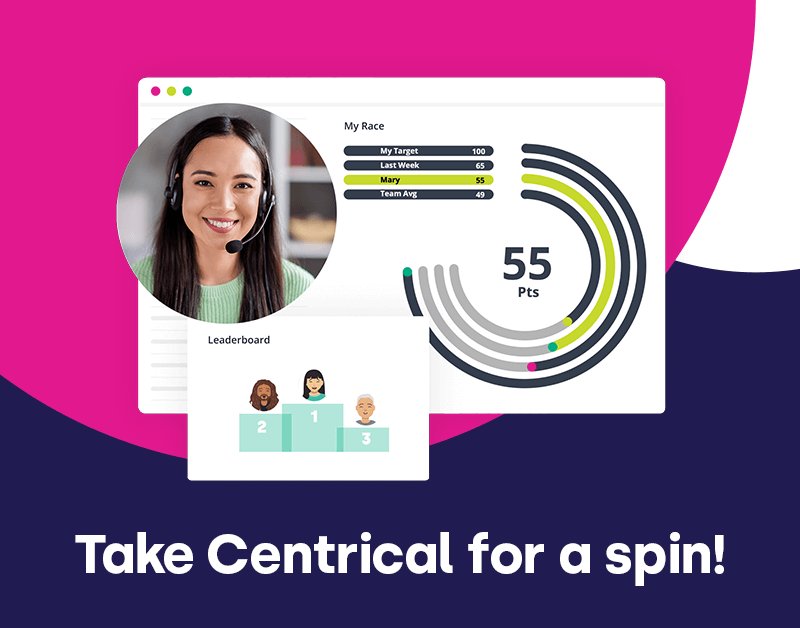






 Turn any business goal into a running performance program in minutes.
 Engage and motivate your frontline teams
 Deliver world class CX with dynamic, actionable quality evaluations
 Boost performance with personalized, actionable goals
 Nurture employee success with the power of AI
 Listen and respond to your frontline, continuously
 Drive productivity with performance-driven learning that sticks
 Drive agent efficiency, deliver client results
 Keep tech teams motivated and proficient on products and services while exceeding targets
 Maintain compliance while building customer happiness and loyalty
 Enlighten energy teams to boost engagement
 Engage, develop, and retain your agents while driving better CX
 Improve the employee experience for your reservations and service desk agents
 Gal Rimon
 Madeleine Freind

 Natalie Roth
 Linat Mart













 Doron Neumann
 Daphne Saragosti
 Ella Davidson
 Ariel Herman
 Ronen Botzer